

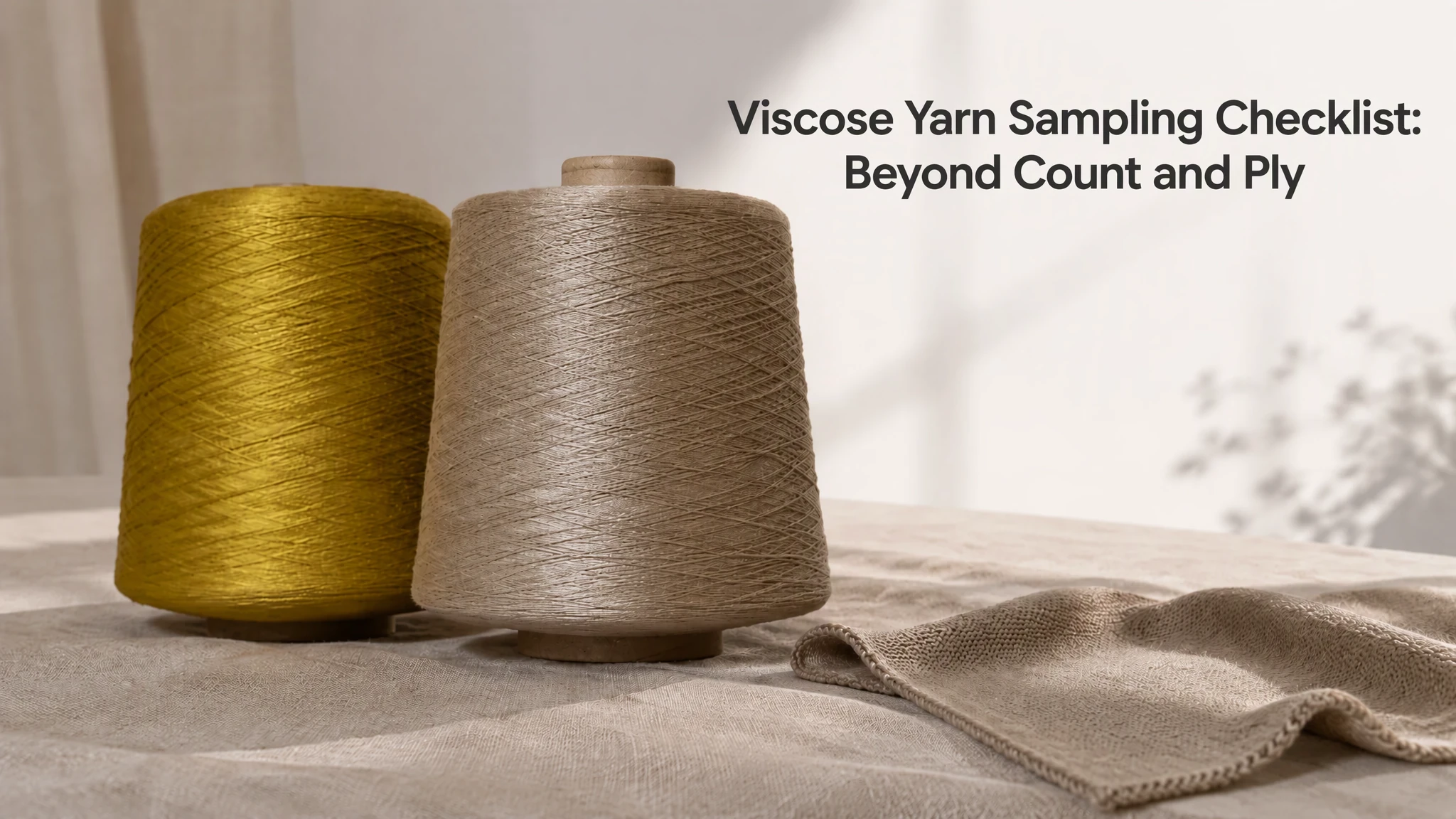
Use this viscose yarn sampling checklist to review cones, color references, trial swatches and order specifications before bulk production.
Viscose Yarn Sampling Checklist: Beyond Count and Ply
A viscose yarn sampling checklist should begin with count and ply, but it should not end there. Buyers comparing 100% viscose yarn for knitting or weaving also need to align the cone build, color standard, surface appearance and trial method before they can judge whether a sample is suitable for a specific fabric.
This distinction matters because two offers that use a similar commercial description can still behave differently on the buyer’s machine. The sensible route is not to infer performance from a product name. It is to define the target fabric, receive a representative yarn sample, make a trial fabric under recorded settings and confirm the mutually agreed specification before bulk production.
Why this topic is different from a count-and-ply comparison
SALUD already has a detailed article comparing 30S/1, 30S/2, 32S/1 and 32S/2 viscose yarn. That article addresses how count and ply change yarn size and fabric direction. The next procurement question is broader: once a buyer has shortlisted a count and ply, what should be checked on the actual sample?
Viscose yarn can be supplied in different colors and package forms, but buyers should confirm the required shade and cone format through the actual submitted sample. Visual appearance alone does not establish numerical performance or certification; those points should be verified through the relevant documents, the trial fabric and the specification agreed by both parties.

Viscose yarn sampling checklist for the first inquiry
A useful inquiry describes the fabric and process before asking for a quotation. At minimum, give the supplier:
- the intended process: knitting or weaving;
- the target fabric construction or machine type;
- the count and ply under consideration;
- raw white, stock shade or custom color requirement;
- expected cone or package requirement, if the machine has restrictions;
- the destination use and the buyer’s priority, such as drape, smoothness, coverage or color appearance.
Do not leave the application implicit. A yarn selected for a fine single-jersey trial is being judged in a different context from a woven lining or a heavier knit. SALUD’s 100% viscose yarn product page provides the product-family context, while the project-specific construction should be confirmed in the inquiry.

Review the physical package before the trial
When the sample arrives, photograph and record the package before it goes to the machine. Check that the product identity on the shipment corresponds to the purchase discussion, then review what can genuinely be observed:
- Cone and tube condition. Look for impact damage, crushing or an unstable package that could affect unwinding.
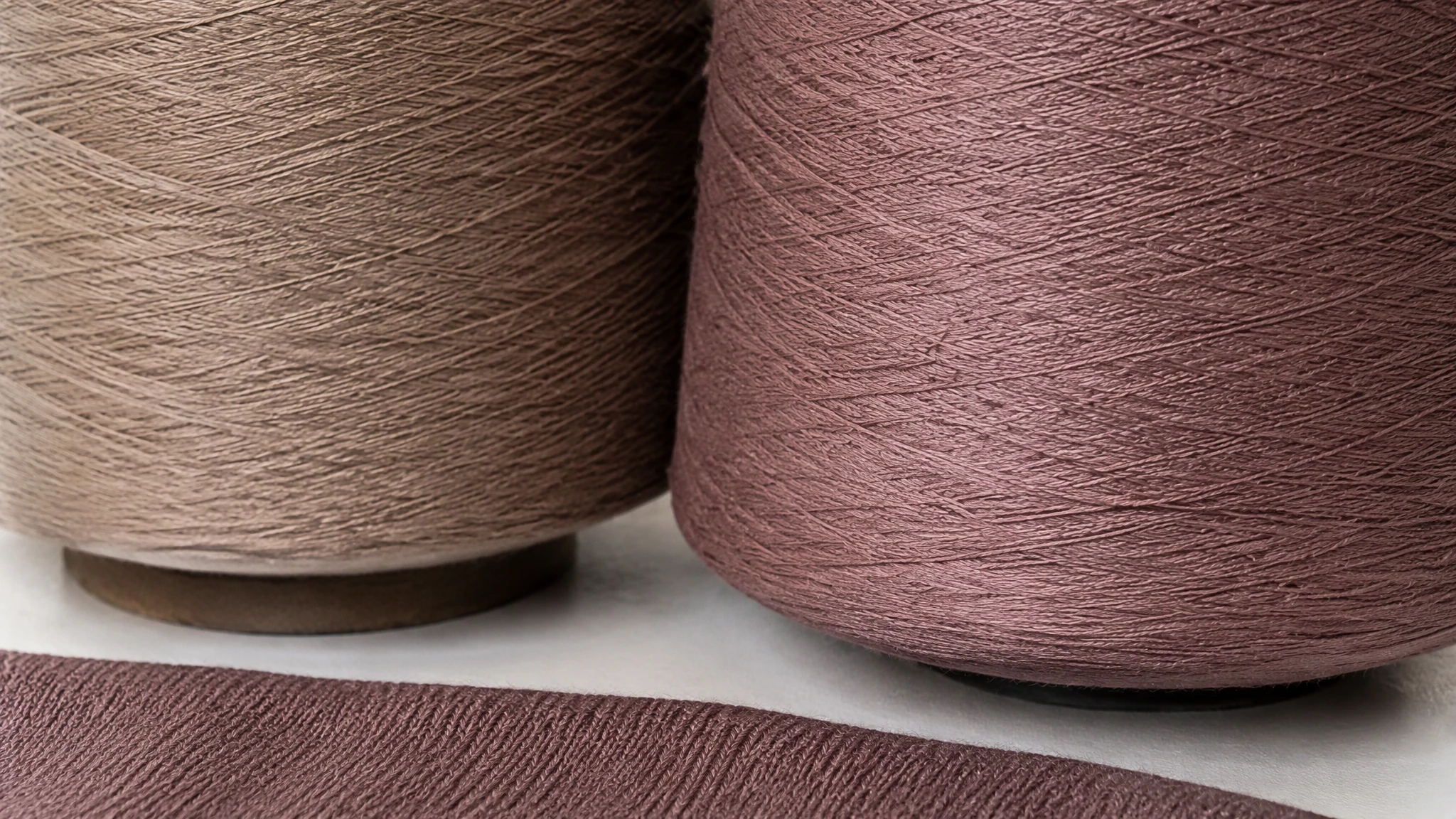
- Winding appearance. Check for obvious loose layers, displaced yarn or damage at the shoulder and base.
- Shade reference. Compare the yarn with the approved physical or digital color reference under a controlled viewing condition. A screen image alone is not a final color approval.
- Surface appearance. Note visible hairiness, sheen and consistency, but avoid turning a photograph into a numerical quality claim.
- Sample traceability. Keep the supplier’s sample identity linked to the trial swatch and the machine record.
The cone photos show why package and surface deserve separate attention: winding geometry, tube form and reflected light are all visible, yet none substitutes for a machine trial.
Build a trial that answers one decision
A good trial is small enough to control and specific enough to decide. Use one agreed yarn sample, one documented machine setup and one target fabric construction. If several yarn options are being compared, change one relevant variable at a time.
Record the machine, gauge or weaving setup, stitch or fabric construction, feeding arrangement and finishing route used for the sample. These are buyer-side trial records, not claims about the yarn. If an adjustment is made during the trial, record it rather than presenting the final swatch as if it came from the original settings.
The finished swatch should be evaluated for the project’s real priorities. Depending on the fabric, that may include:
- visual coverage and evenness;
- handle and drape;
- stitch definition or woven surface;
- shade appearance in the fabric rather than only on the cone;
- behavior through the buyer’s actual feeding and production path;
- dimensional or color checks performed under the buyer’s agreed test method.
For a broader explanation of count terminology, buyers can also consult SALUD’s yarn count guide. The conversion is useful, but fabric approval still depends on the trial.
Approve the swatch, not a marketing adjective
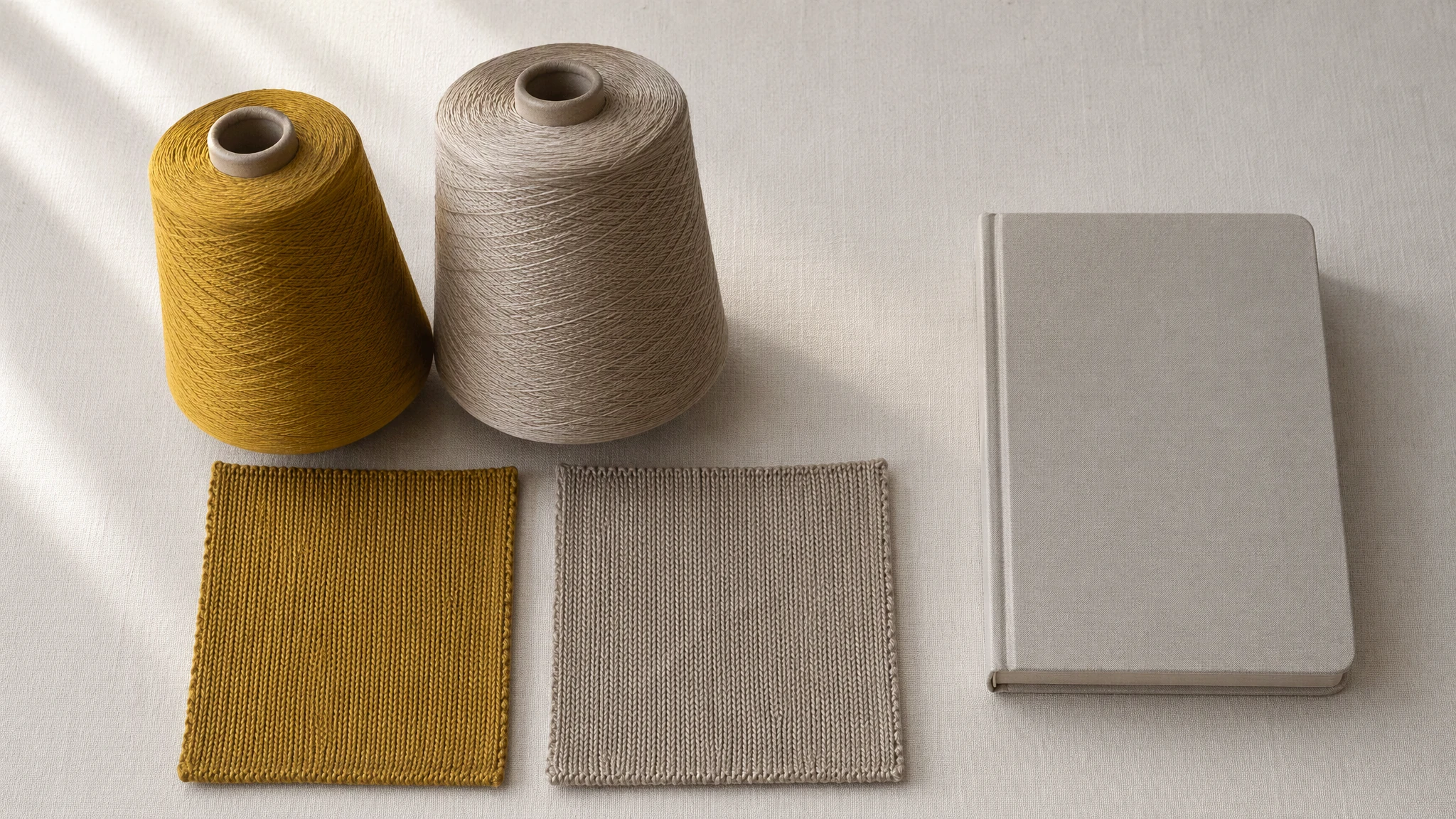
Words such as “soft,” “smooth” or “bright” are useful conversation starters, but they are not an approval protocol. A practical approval package contains the physical or securely identified yarn sample, the resulting swatch, the relevant trial settings and a concise list of the characteristics the buyer accepts.
Color also needs a defined reference. Review the cone and the knitted or woven sample together, because the yarn’s appearance changes when it becomes fabric. Keep the approved reference available for the next stage rather than relying on memory or an uncalibrated phone photo.

What to lock before a bulk order
Before moving from sampling to a bulk order, both parties should confirm the commercial and technical description that applies to that order. The list may include composition, count, ply, color reference, package form, intended process, order quantity and the acceptance method relevant to the project. Only include a tolerance, test method or certificate requirement when it has actually been discussed and accepted.
Do not assume that a historic image, sample card or previous article proves current stock, lead time, price or certification. Ask for the current offer and supporting documents relevant to the destination market and end use.
The same discipline applies to lot-to-lot decisions. Retain the approved yarn reference and trial swatch, and state which reference governs approval. If a change is needed, approve a new sample rather than carrying an informal change into production. SALUD’s yarn sample approval checklist gives a useful general framework for that handover.
A concise buyer-to-supplier message
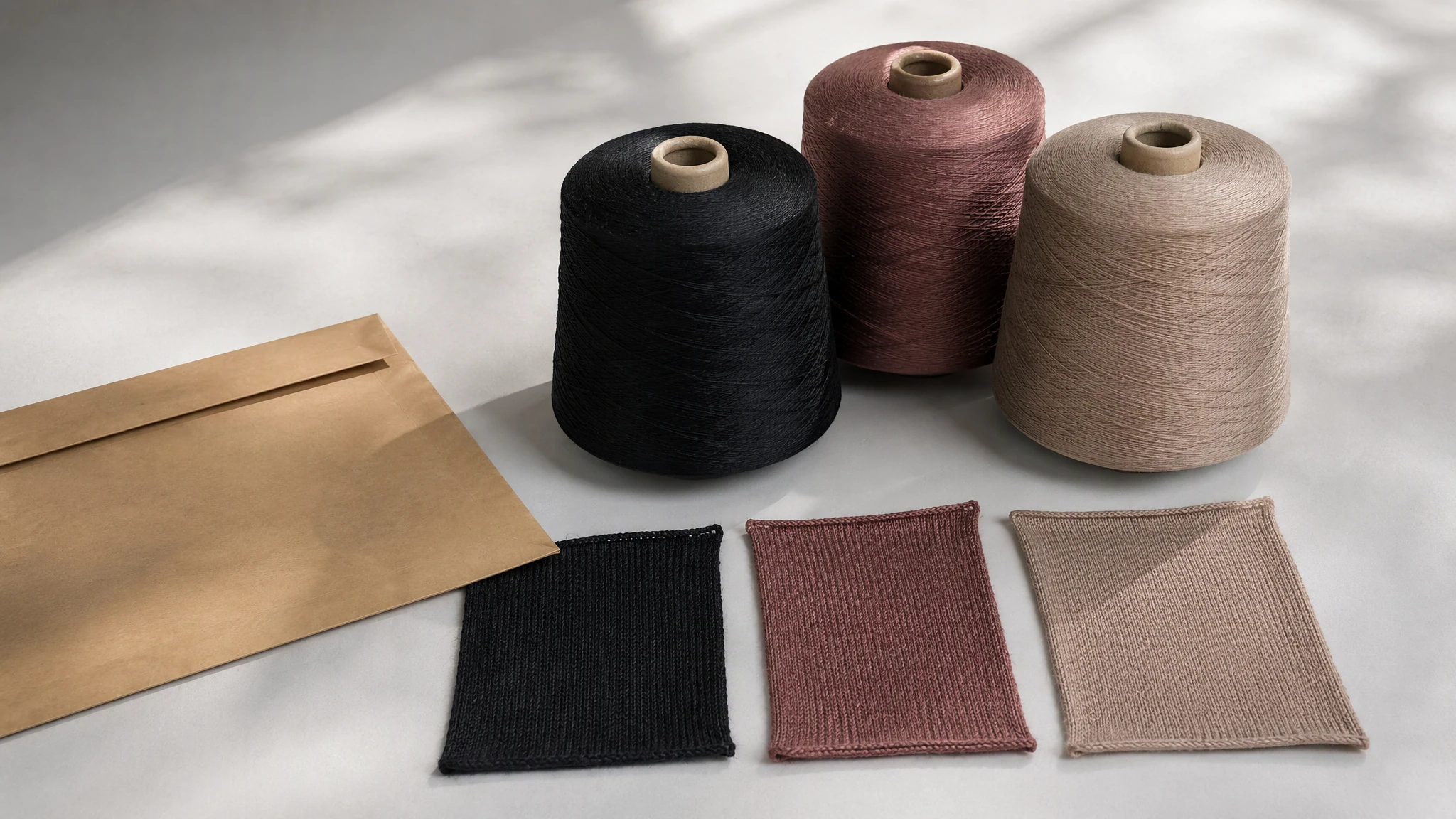
A buyer can shorten the first exchange by sending a structured note:
We are evaluating 100% viscose yarn for [knitting/weaving application]. Our target is [fabric construction or machine], and we are considering [count/ply]. Please advise which sample is appropriate and confirm the sample identity, color reference and package form. We will approve the final specification based on the yarn sample, a trial fabric made under recorded settings and the terms confirmed by both parties.
This gives the supplier enough context to respond without inviting unsupported assumptions. It also makes clear that the decision will be evidence-led.
Start with a sample that matches the project
If you are sourcing viscose yarn for a new fabric, send SALUD your target process, construction, count and ply, color direction and package requirements. The team can discuss an appropriate sample route and the specification points that need mutual confirmation.
Contact SALUD Style to discuss your viscose yarn project. Final selection should be based on the submitted yarn sample, the buyer’s trial fabric and the agreed order specification.
